Contact Period (c. 1500-1763 CE)
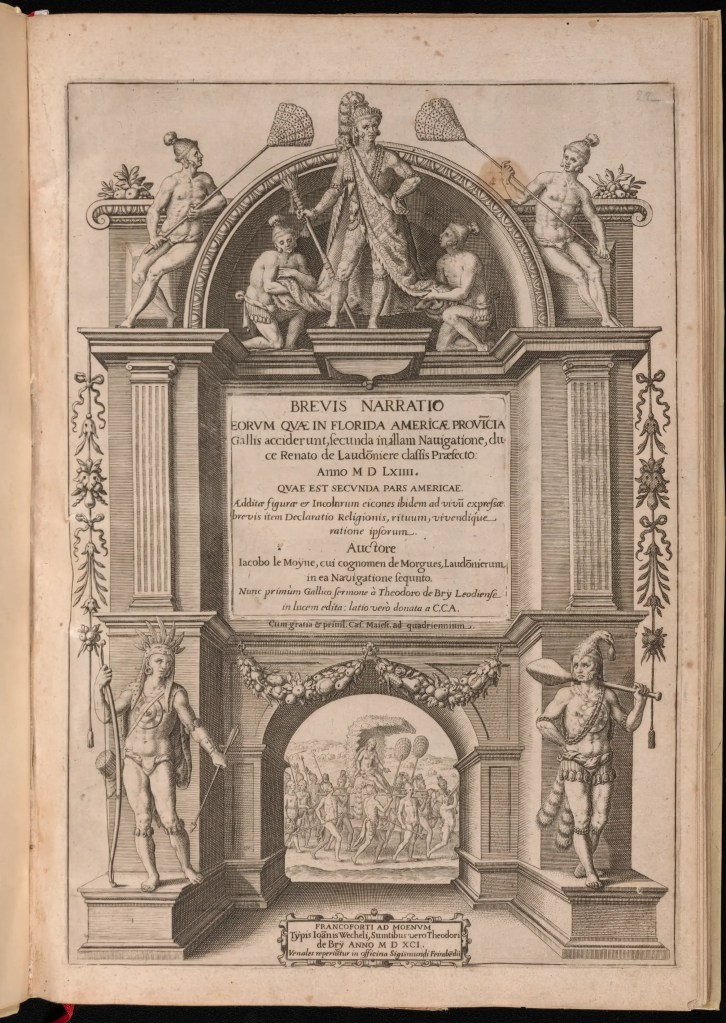
Theodor de Bry Title page, Brevis narratio eorum quae in Florida provincia Gallis acciderunt. Frankfort, 1591. University of Miami Jay I. Kislak Collection
In 1591, the Flemish engraver Theodor de Bry published this illustrated volume with 42 engravings based on Jacques Le Moyne’s drawings and narrative entitled Brevis narratio eorum quae in Florida Americae provincia Gallis acciderunt (A Brief Narration of Those Things Which Befell the French in the Province of Florida in America).
The Brevis narratio recounts the history of the French Huguenot expeditions to Florida under Jean Ribault, Dominique de Gourgues, and René de Laudonnière. Desirous to have a foothold in Florida to challenge Spain, the French built a short-lived Huguenot fort in Parris Island in 1562. A second attempt was led by René Goulaine de Laudonnière in 1564, who founded Fort Caroline, near present day Jacksonville. Le Moyne was the cartographer and artist of this expedition, which ended in utter disaster at the hands of Pedro Menéndez de Avilés, sent by the Spanish king to clear the land from the French. The Spaniards destroyed Fort Caroline, and shortly after massacred more than 300 French soldiers under Jean Ribaut, who had just arrived in Florida to support the French cohort at Fort Caroline.
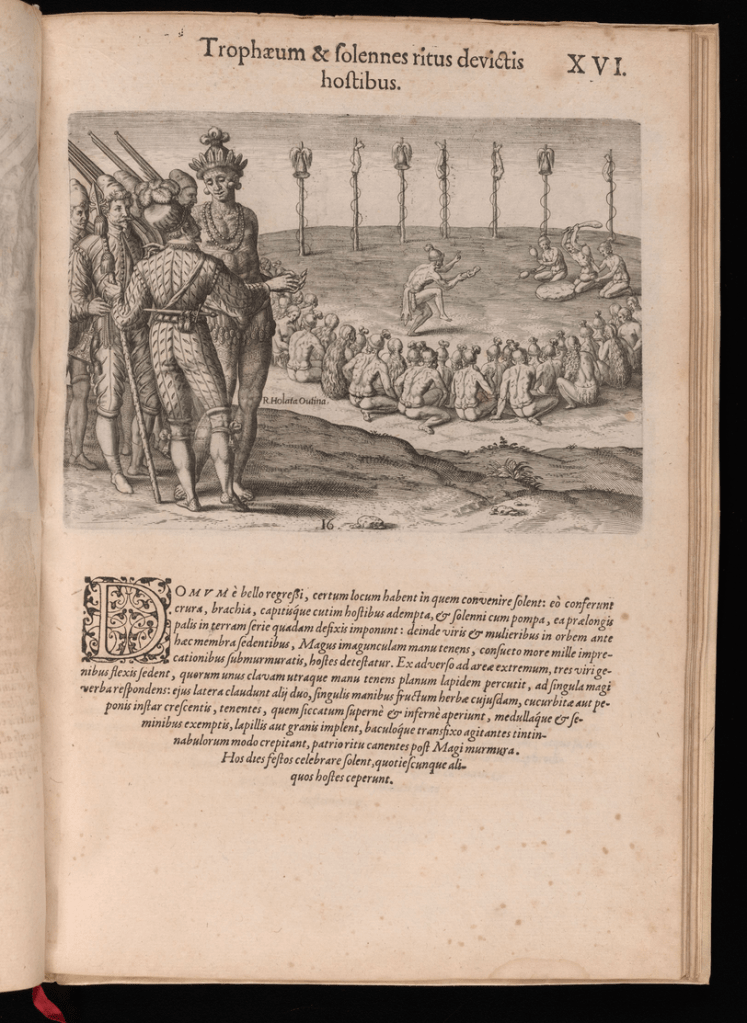
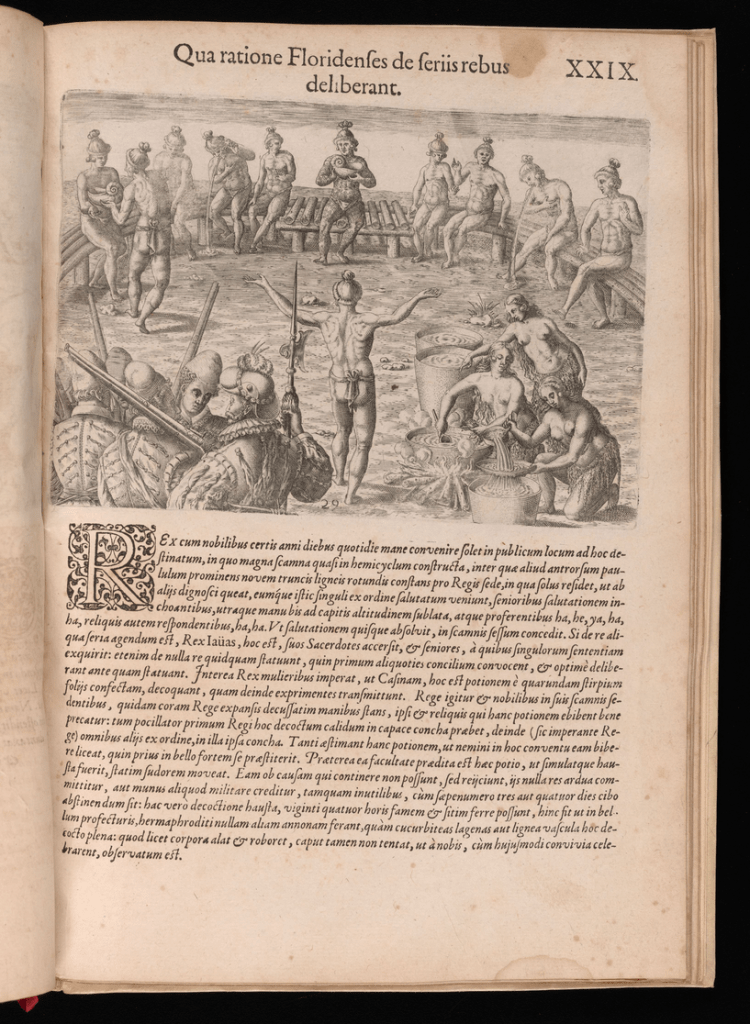
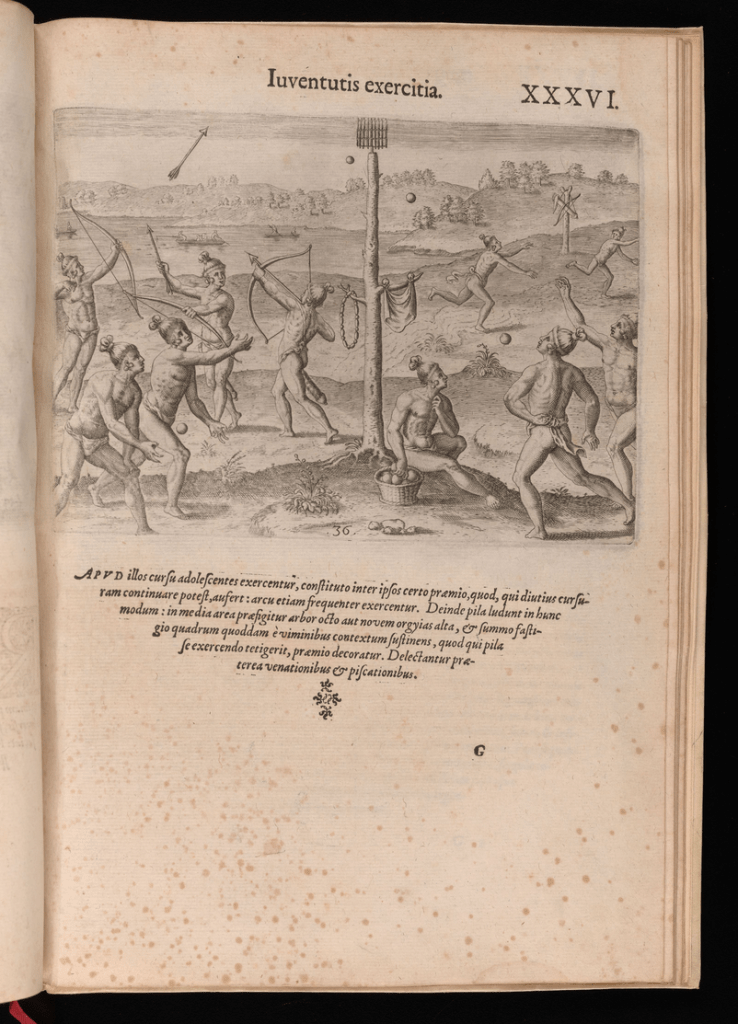
Le Moyne’s narrative is one of three relations written by the French recording their interactions with several Indigenous chiefdoms of the land. His drawings, all lost except one, have been taken as the only extant visual record of the Timucua and many of their cultural practices. Florida ethnohistorians and archaeologists have recently questioned the existence of Le Moyne’s drawings, and even of his narrative. They believe that De Bry may have derived many of his engravings from sketches of the Tupibambá in Brazil made by Hans Staden. Indeed, because De Bry was never in the Americas, he borrowed from other artists’ images and narratives for his work. However dubious, De Bry’s engravings–along with his other thirteen books of Great Voyages–are relevant documents if only for recording how images chronicling first contacts and Indigenous cultures across the Americas were framed and marketed to an avid public in early modern Europe.
Click on each image for the title and description.

 Exploring Florida Cultural Legacies