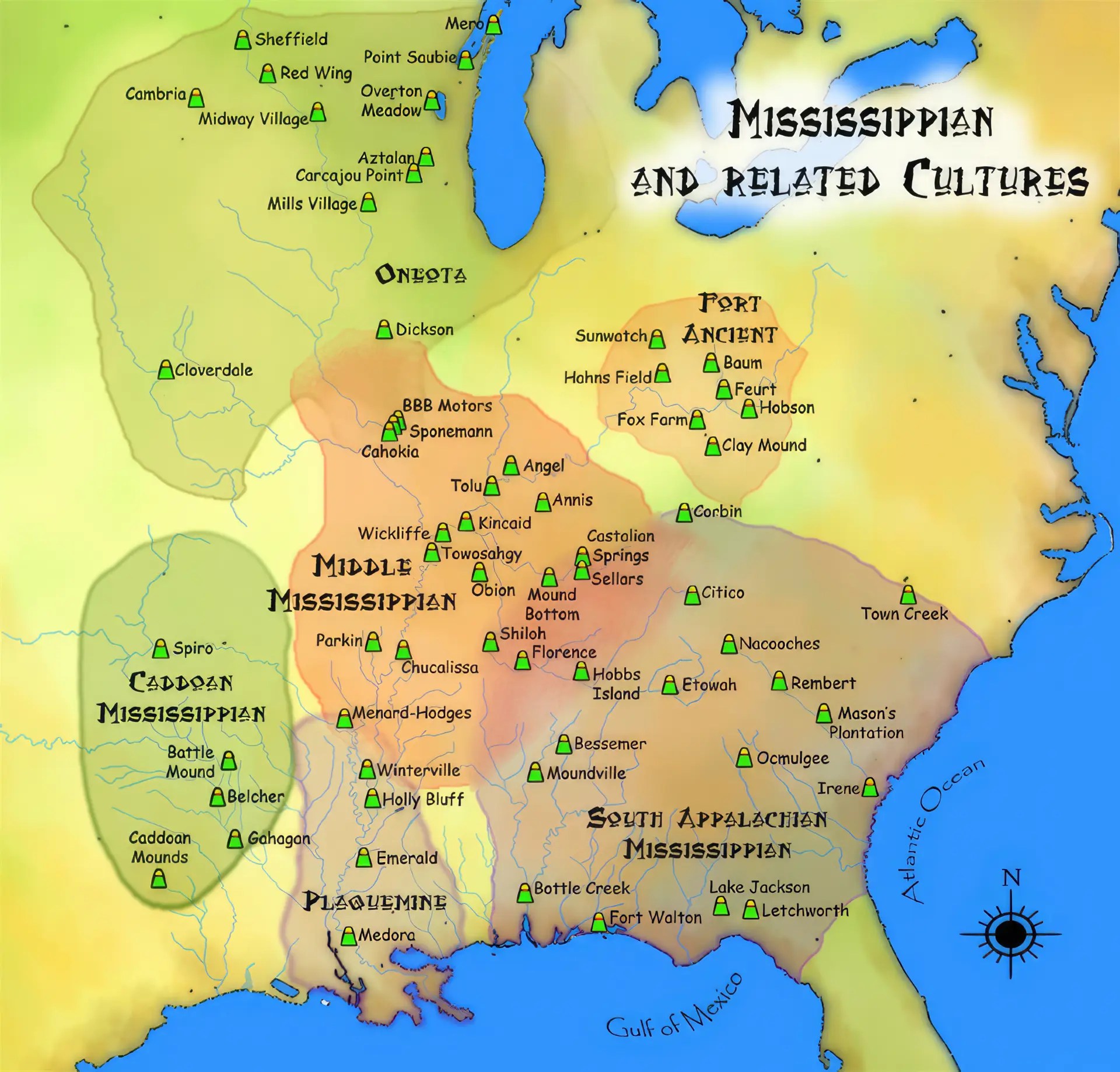
Mississipian and Related Cultures
The Mississippian period dates from about 900 CE to the 1650’s. Based on a vigorous agricultural economy in the Mississippi Valley, this period favored the emergence of highly complex, stratified societies. The legitimation of their elites fostered the production of sophisticated art objects that circulated in a vast exchange network extending to Cahokia in Illinois, Spiro in Oklahoma, Moundville in Alabama, Etowah in Georgia, Lake Jackson in northwest Florida, and most likely, also touching Key Marco in the Gulf coast. Some classes of objects evincing intense trade in this wide Mississippian geo-cultural region are engraved gorgets, repoussé copper plates, masks, headdresses, effigy pipes, stone plaques, and delicately incised ceramics. These art objects shared a constellation of cosmographic motifs and themes and have been coined (not without controversy), as the Southeastern Ceremonial Complex symbols.
 Exploring Florida Cultural Legacies